About
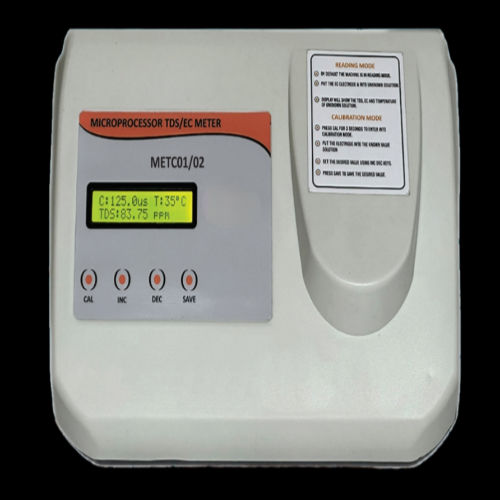
A microprocessor TDS conductivity meter is a solid state instrument that measures the conductivity and total dissolved solids (TDS) in water. It uses an ion selective electrode to measure the electrical conductivity of water, which can help determine if the water supply needs treatment or has problemsReliable Water Quality AnalysisEngineered for laboratory and industrial environments, this meter delivers precise assessment of TDS, conductivity, and temperature. Its portable design and robust construction ensure consistent performance and user safety during both field and lab applications. With automatic calibration and data logging capabilities, it aids in maintaining stringent water quality standards.
Advanced Features for Enhanced UsabilityAutomatic temperature compensation, rapid 1-second sampling, and platinum conductivity sensors provide dependable results. The digital LCD with backlight and alpha-numeric display enhances visibility in various lighting conditions. Overrange and error alarms ensure operational safety and efficiency.
FAQ's of Microprocessor TDS Conductivity/ Temp Meter:
Q: How do I calibrate the Microprocessor TDS Conductivity/ Temp Meter?
A: The meter supports both automatic and manual calibration using standard calibration solutions. Follow the on-screen prompts on the digital LCD to complete calibration for TDS and conductivity measurements.
Q: What applications is this meter suitable for?
A: This device is ideal for laboratory analysis and industrial water testing. Its portable construction also allows for field testing, making it valuable for water quality assessment across various sectors.
Q: When should I use the automatic temperature compensation feature?
A: Automatic temperature compensation (ATC) is always active and corrects your readings for temperature differences within 0C to 100C, ensuring accurate measurements regardless of sample temperature.
Q: Where can the data be stored from this meter?
A: The meter can store up to 1000 readings internally for easy access. Additionally, data can be exported through the RS232 interface for external logging or analysis.
Q: What is the process for measuring TDS and conductivity?
A: Simply immerse the platinum conductivity sensor in the water sample, select the desired mode on the meter, and the results for TDS, conductivity, and temperature will be displayed digitally within one second.
Q: What are the benefits of the IP54 enclosure protection and ABS construction?
A: IP54-rated enclosures protect against dust and water splashes, while the ABS plastic body provides durability and resistance to chemicals, ensuring long service life even in challenging environments.