About
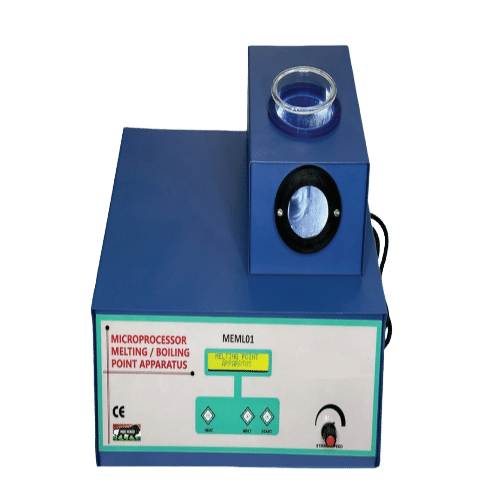
A microprocessor melting point apparatus is a device that can measure the melting point of a substance, which is the temperature at which a solid and liquid form of a pure substance can coexist in equilibriumSimultaneous Testing for EfficiencyThis apparatus enables you to test up to three samples at once, enhancing productivity in busy laboratory settings. Its selectable heating rates (1C/min or 2C/min) provide the flexibility to adapt the experiment pace according to the sample requirements, optimizing both accuracy and turnaround time.
Advanced Safety and Control FeaturesEquipped with a thermal fuse for overheat protection and a membrane-type key control panel, the device ensures both user safety and convenience. The built-in PT-100 platinum resistance thermometer provides precise temperature measurements, while the fan-assisted cooling system helps maintain stable internal conditions for accurate results.
Designed for Laboratory ExcellenceConstructed from durable mild steel and finished in a professional white and blue color scheme, this rectangular instrument fits seamlessly into pharmaceutical and research lab environments. Its microprocessor-based functionality, digital 7-segment LED display, and automation capabilities promise reliability and user-friendly operation.
FAQ's of Microprocessor Melting Point:
Q: How does the Microprocessor Melting Point apparatus determine melting point?
A: The apparatus gradually heats up to three samples simultaneously, using selectable heating rates of either 1C/min or 2C/min, and relies on a PT-100 platinum resistance thermometer to precisely monitor temperature changes. As each sample reaches its melting point, the device records the corresponding temperature for accurate documentation.
Q: What are the main benefits of using this melting point apparatus in a laboratory setting?
A: This instrument offers high accuracy (0.5C), the convenience of simultaneous sample testing, and rapid result storage for up to 100 samples. Its user-friendly controls and automated calibration facilities minimize errors and time spent on manual adjustments, making it ideal for busy pharmaceutical and research labs.
Q: When is auto or manual calibration needed with this device?
A: Auto calibration is recommended during routine use for consistent accuracy, while manual calibration may be performed during initial setup or after significant changes in operational conditions to ensure measurement integrity. Both modes are easily accessible from the membrane control panel.
Q: Where is this melting point apparatus typically used?
A: It is primarily used in pharmaceutical laboratories, chemical research institutes, and academic environments across India, where precise melting point determination is essential for quality control and research application.
Q: What process should users follow to ensure safe and proper usage?
A: Users should place up to three samples in the designated capillary tubes, set the desired heating rate, and initiate testing using the control panel. The thermal fuse and cooling fan ensure safety, while the microprocessor and digital display guide the user throughout the measurement process.
Q: How does the storage function assist in laboratory workflows?
A: The built-in storage capability can retain up to 100 results, making it simple to review historical data, compare multiple samples, and maintain a clear record for compliance and quality assurance purposes.