About
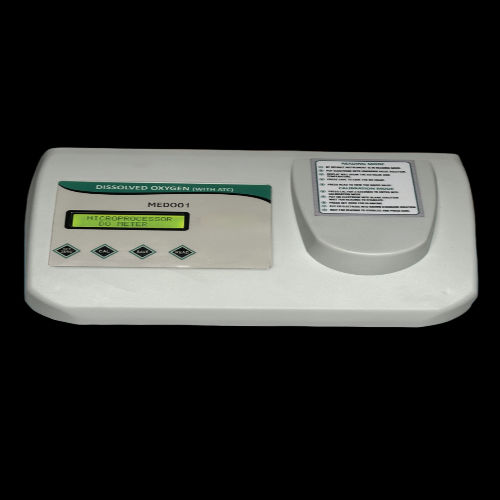
A microprocessor dissolved oxygen (DO) meter is a solid state instrument that can measure DO and temperature. It can be used in many applications, including agriculture, fisheries, water quality control, and moreAdvanced Measurement TechnologyThis dissolved oxygen meter incorporates microprocessor technology to deliver accurate and fast readings, ensuring superior long-term stability. With automatic calibration and compensation for both salinity and barometric pressure, users benefit from consistently reliable results, even in changing environmental conditions. Its polarographic DO probe guarantees high sensitivity and precise outputs in laboratory and field applications.
Simple Operation and Comprehensive AccessoriesDesigned for user convenience, the instrument provides automatic calibration using air or standard solutions, and has a back-lit LCD for clear display. It comes packed with essential accessories, including a DO probe, membrane caps, electrolyte solution, and a comprehensive manual. The standard 1.5-meter probe cable aids easy handling, while memory backup preserves your most recent reading.
Versatility in ApplicationThis meter is suitable for a variety of settings such as environmental monitoring, wastewater treatment, aquaculture, and research laboratories. Its durable ABS case, reliable battery backup, and portability make it ideal for both stationary and on-site dissolved oxygen measurement.
FAQ's of Microprocessor dissolved oxygen meter:
Q: How does the automatic calibration process work for this dissolved oxygen meter?
A: The meter features automatic calibration, allowing users to calibrate the device easily using either ambient air or a standard oxygen solution. The built-in microprocessor guides the calibration steps, ensuring accurate set-up without manual adjustment.
Q: What is the recommended usage environment for the dissolved oxygen meter?
A: This instrument is designed for use in both laboratory and field settings, functioning optimally between temperatures of 0C to 50C and up to 80% relative humidity. It is ideal for environmental monitoring, wastewater treatment, aquaculture, and research laboratories.
Q: When should I replace the membrane caps or electrolyte solution on the DO probe?
A: It is advised to replace membrane caps and electrolyte solution whenever readings appear unstable, after heavy usage, or as part of routine maintenance every few months to ensure optimal performance and accuracy.
Q: Where can I output or store my measurement data?
A: Measurement data can be output via the RS232 interface, making it easy to transfer results to a computer or printer. Additionally, the device stores the last measured reading in its memory, even after powering off.
Q: What are the benefits of using a microprocessor-based DO meter compared to analog models?
A: A microprocessor-based DO meter offers enhanced measurement accuracy, greater stability over time, automatic compensation for various factors, faster response, and user-friendly digital controls, making it more reliable and convenient than analog models.
Q: How does the meter compensate for salinity and atmospheric pressure changes?
A: The device includes automatic salinity compensation from 0 to 35 ppt and automatic barometric pressure compensation, ensuring precise dissolved oxygen measurements regardless of environmental fluctuations.
Q: What steps are involved in measuring dissolved oxygen using this instrument?
A: Simply connect the polarographic DO probe, calibrate using air or standard solution, immerse the probe in your sample, and allow it to stabilize (typically in less than 30 seconds). The result appears on the back-lit LCD display, with options to store or transfer data as needed.