About Droppers and pipettes
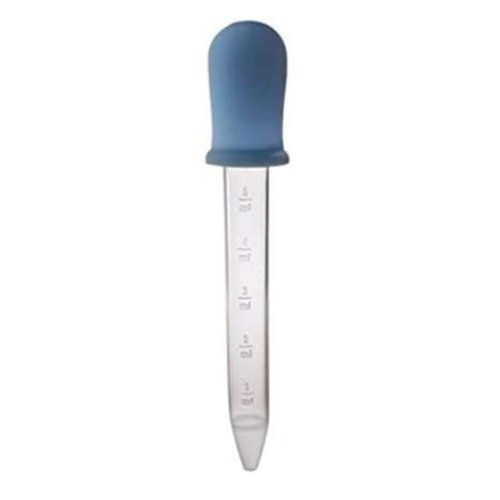
Thedropper, also known as Pasteur pipette, is usually made up of plastic or glasscylinder, having a small nozzle on one side and a rubber holder on the other.It is used to put the liquids or solutions in any medium dropwise, that is, onedrop at a time, a necessary equipment when any reagent is required in a preciseamount in a solution.
Pipettesare of varying sizes, designed for titration experiments wherein chemicals aremixed in specific volume. These are narrow glass cylindrical pipes, used formeasuring an exact volume of liquid and placing it into another container.
Precision and Versatility in Liquid HandlingEngineered for accuracy, these droppers and pipettes offer smooth volume measurement with graduation markings that are easily visible. The fine tip design ensures controlled, precise dispensing even for small volumes, making them ideal for critical laboratory tasks. Their adaptability spans a wide spectrum of applications, from titrations to sample addition, across labs and research institutions.
Robust Build and Safety ComplianceCrafted from high-quality glass or polypropylene, these tools feature a uniform, chemical-resistant finish and non-reactive surfaces. Each piece complies with ASTM and ISO standards for laboratory glassware. The autoclavable nature allows for reliable sterilization, and users can choose from sterile or non-sterile options based on application requirements.
Packaging Options and User-Friendly DesignAvailable in individually packed or bulk packaging, these droppers and pipettes cater to diverse storage and workflow needs. Their lightweight, ergonomic construction and manual operation facilitate ease of use, while the transparency allows quick verification of liquid levels. Droppers are supplied with either rubber or plastic bulbs, supporting various user preferences.
FAQ's of Droppers and pipettes:
Q: How can I ensure accurate volume measurement using these graduated droppers and pipettes?
A: For precise measurements, always read the liquid level at the graduation markings at eye level, ensuring the meniscus aligns with the marked line. The clear graduation and smooth finish help reduce reading errors during usage.
Q: What materials are used to manufacture these droppers and pipettes, and are they chemically resistant?
A: These products are crafted from high-quality glass or polypropylene (PP), both known for their chemical resistance and non-reactive properties. This allows safe use with aqueous and non-aqueous solutions in various laboratory procedures.
Q: When is it necessary to choose between the disposable and reusable versions?
A: Disposable versions are ideal for applications requiring strict contamination control or high-throughput workflows, while reusable types suit routine uses where economical and repeated sterilization is feasible. Both types are available in sterile and non-sterile formats.
Q: Where can these droppers and pipettes be used effectively?
A: They are suitable for a variety of environments including laboratories, clinical settings, pharmaceutical manufacturing, medical research facilities, and educational institutions for tasks like titrations, sample transfer, and precise liquid dispensing.
Q: What is the typical process for sterilizing these devices?
A: Reusable glass or polypropylene pipettes and droppers can be sterilized by autoclaving at 121C, following the recommended cycle times. Ensure the devices are compatible with autoclave procedures specified by the laboratory protocol and manufacturer's guidelines.
Q: What are the main benefits of using pipettes and droppers with clear graduation markings?
A: Clear graduation markings provide excellent visibility, which results in enhanced measurement accuracy and minimized risk of dosing errors. This helps improve precision in all laboratory liquid handling processes.







 Get Latest Price


 Send Inquiry

 Send Inquiry
 Send SMS


